Last Updated: 13 Apr, 2026 | Views: 905
Age: 68
Profession: Politician
Other Profession(s): Physician
Higher Education: Hannover Medical School (MD, MPH)
About (Profile/Biography):
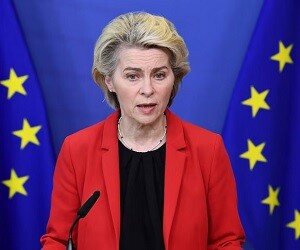
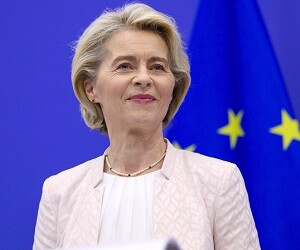
Ursula von der Leyen is a German physician-turned-politician who became the first woman to lead the European Commission, steering the European Union through pandemics, war, energy shocks, and climate ambition. Born into a political family in Brussels and raised across Europe, she blends multilingual fluency with a consensus-building style shaped by years in German federal cabinets. As Commission President, she championed the European Green Deal, digital sovereignty, vaccine procurement, and firm support for Ukraine. Known for discipline, calm messaging, and strategic persistence, she often frames policy as protection for citizens and competitiveness for industry. Her tenure has also faced scrutiny over transparency and procurement decisions, testing her commitment to accountability. A mother of seven with medical training, she frequently links public health, social policy, and economic resilience. Supporters praise her crisis leadership; critics question centralization and communication. Her story reflects Europe’s evolving identity in uncertain times.
Early Life and Education of Ursula von der Leyen
• She was born in Brussels in 1958 to a European civil servant family, and her childhood across Belgium and Germany shaped her multilingual, pan-European outlook early on.
• Ursula studied economics briefly before switching to medicine, earning a medical degree in Hannover, where she later worked as a physician and researcher in public health.
• She married Heiko von der Leyen and raised seven children, often citing family logistics as training for time management and pragmatic decision-making.
Rise in German Politics
• She joined the Christian Democratic Union and quickly rose through regional roles, earning a reputation for diligence, policy detail, and calm media presence.
• As Family Affairs Minister, she expanded childcare access and parental leave, arguing that modern families needed state support to balance work and care.
• Later, as Labour Minister, she pushed job training and welfare reforms, presenting social policy as a tool for competitiveness and inclusion.
Germany’s First Female Defence Minister
• In 2013, she became Germany’s first woman Defence Minister, tasked with modernizing equipment, readiness, and the Bundeswehr’s workplace culture.
• Ursula promoted more women in uniform and family-friendly postings, linking equality to operational effectiveness and long-term recruitment goals.
• Her tenure faced criticism over costly consultancy contracts and procurement delays, sparking investigations and political pressure at home.
President of the European Commission
• In 2019, she was nominated as a compromise candidate and confirmed as the first woman to lead the European Commission after intense parliamentary debate.
• She launched the European Green Deal, framing climate action as an economic strategy to future-proof industry and create green jobs across regions.
• During COVID-19, she coordinated joint vaccine procurement for member states, arguing unity would secure doses faster and at fairer prices.
Leadership During Crises
• She guided EU sanctions and aid after Russia’s invasion of Ukraine, positioning Europe as a geopolitical actor with coordinated economic leverage.
• Ursula advanced energy diversification plans to cut reliance on Russian gas, accelerating renewables, storage, and cross-border energy links.
• She pushed digital regulation like the Digital Services and Markets Acts, aiming to curb platform power while protecting innovation and users.
Major Controversies
• She faced scrutiny over text messages with a vaccine CEO during negotiations, raising transparency questions and calls for fuller disclosure.
• Critics argued central vaccine purchasing slowed early rollout, while supporters said it prevented internal bidding wars and unequal access.
• Earlier consultancy spending issues in Germany resurfaced in debates, with opponents questioning oversight and administrative judgment.
Awards and Recognitions
• She has appeared repeatedly on global power lists, recognized for steering Europe through health, climate, and security challenges.
• Ursula received international honors for advancing gender equality and multilateral cooperation in times of rising geopolitical tension.
• Universities across Europe awarded honorary distinctions, citing her role in shaping EU policy on climate, health, and digital governance.
Lesser-Known Facts
• She speaks German, French, and English fluently, often switching languages seamlessly during diplomatic meetings and press briefings.
• Ursula once lived in California during her husband’s academic posting, gaining insight into American research culture and university life.
• Trained as a doctor, she maintains a strong interest in epidemiology and public health data, influencing her pandemic policy instincts.
Wait!
Here're some popular profiles for you.