Last Updated: 08 Apr, 2026 | Views: 482
Age: 69
Profession: Defence
Other Profession(s): Military Officer
Higher Education: Imam Ali Officers' Academy
About (Profile/Biography):
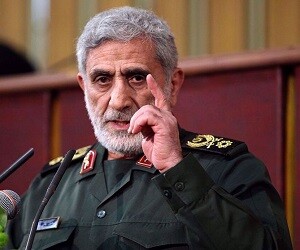
Esmail Qaani is an Iranian military commander who rose through the ranks of the Islamic Revolutionary Guard Corps to lead the Quds Force after Qassem Soleimani’s death in 2020. Known for a lower public profile, he built his career in logistics, cross-border coordination, and long-term regional networks rather than media visibility. Colleagues describe him as methodical, discreet, and attentive to chain-of-command discipline. His tenure has focused on continuity—maintaining relationships with allied groups while adapting to tighter sanctions and surveillance. Qaani’s experience from the Iran–Iraq War shaped his cautious approach to risk and resource management. As Quds Force chief, he operates in a complex arena spanning Iraq, Syria, Lebanon, and beyond, where political signaling and deniability often intersect. Supporters credit his steadiness during a volatile transition; critics argue his strategies entrench regional tensions. Through it all, Qaani remains a pivotal but comparatively quiet figure in Iran’s external security apparatus.
Early Life & Background
• He was born in Mashhad, and Esmail’s youth unfolded during pre-revolution tensions that later influenced his commitment to state security.
• Qaani joined the IRGC soon after 1979, and his early duties emphasized discipline, logistics, and unit cohesion under pressure.
• He served in the Iran–Iraq War, and those front-line years shaped his cautious planning and respect for supply chains.
Rise Within the IRGC
• He advanced through regional commands, and Esmail gained a reputation for reliable coordination across distant, difficult theaters.
• Qaani handled eastern border assignments, and this exposure refined his skills in cross-border intelligence and movement control.
• He became Soleimani’s deputy, and Esmail learned the Quds Force network architecture through years of quiet stewardship.
Leadership of the Quds Force
• He assumed command in 2020, and Qaani prioritized continuity to reassure partners after a sudden leadership loss.
• Esmail emphasized low-visibility travel, and his visits focused on reassurance rather than public spectacle or speeches.
• He adapted operations to sanctions pressure, and Qaani leaned on redundancy, patience, and compartmentalized communication.
Strategy & Working Style
• He prefers methodical planning, and Esmail is known to review logistics details before approving sensitive missions.
• Qaani delegates to regional liaisons, and this structure helps maintain deniability while preserving oversight.
• He values discretion, and Esmail avoids media exposure to keep attention on networks rather than personalities.
Controversies & Criticism
• He is criticized by Western officials, and Qaani’s role is cited in debates over regional proxy conflicts and instability.
• Esmail’s movements are closely watched, and reports of covert travel often trigger diplomatic tensions and denials.
• Sanctions target his activities, and Qaani’s command is frequently discussed in international security assessments.
Awards & Recognitions
• He received Iranian military honors, and Esmail’s decorations reflect long service across multiple high-risk assignments.
• Qaani is respected within IRGC circles, and peers note his steady temperament during leadership transition periods.
• He is acknowledged in state ceremonies, and Esmail’s presence signals institutional continuity after Soleimani.
Lesser-Known Facts
• He reportedly keeps sparse personal routines, and Esmail favors simple schedules that reduce predictability.
• Qaani studied supply logistics deeply, and this interest informs how he evaluates feasibility before commitments.
• He maintains longstanding ties in eastern Iran, and Esmail often references those roots in private briefings.
Wait!
Here're some popular profiles for you.