Last Updated: 07 Apr, 2026 | Views: 503
Age: 89
Profession: Politician
Other Profession(s): Lawyer, Human Rights Activist
Famous For: Delegate to United States House of Representatives
Higher Education: Antioch College (BA), Yale University (MA, LLB)
About (Profile/Biography):
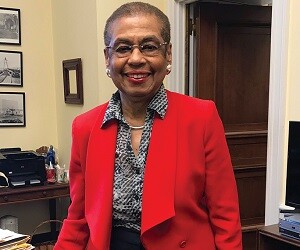
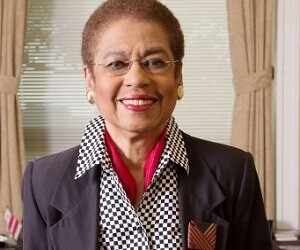
Eleanor Holmes Norton is a lifelong civil rights advocate, constitutional lawyer, and the long-serving congressional delegate representing Washington, D.C. Born in 1937 in the nation’s capital, she grew up in a segregated city that shaped her fierce commitment to justice and equality. Trained at Antioch College and Yale Law School, she entered public life during the civil rights movement, working alongside leading activists to dismantle discrimination. Norton later became the first woman to chair the Equal Employment Opportunity Commission, where she strengthened enforcement of workplace rights. Since 1991, she has served as D.C.’s non-voting delegate in Congress, becoming the city’s most persistent voice for statehood and full democratic representation. Known for her sharp legal mind and principled advocacy, she bridges grassroots activism with legislative strategy. Her career reflects decades of struggle for voting rights, racial equality, women’s rights, and fair employment protections across the United States.
Early Life and Education of Eleanor Holmes Norton
• She grew up in segregated Washington, D.C., and Eleanor often recalls how discrimination around her childhood shaped her lifelong fight for equality and dignity.
• Holmes studied at Antioch College and later Yale Law School, where her sharp legal thinking and activism matured into disciplined civil rights advocacy.
• She joined student protests and civil rights campaigns early, and her exposure to injustice made Norton determined to pursue law as a reform tool.
Civil Rights Movement Role of Eleanor Holmes Norton
• She worked with leaders like Martin Luther King Jr., and Eleanor helped organize protests while documenting racial discrimination cases for legal challenges.
• Norton served as a freedom fighter in the 1960s, and her efforts connected courtroom strategy with street activism for voting and employment rights.
• She later directed the ACLU’s New York office, where Holmes expanded civil liberties work on gender equality and racial justice cases.
Public Service Career of Eleanor Holmes Norton
• She became the first woman to chair the EEOC, and Eleanor strengthened workplace discrimination enforcement across federal and private sectors.
• Norton entered Congress in 1991 as D.C.’s delegate, and she tirelessly advocated for residents lacking voting representation in national decisions.
• Holmes built bipartisan respect, and her legislative focus often centered on transportation, equality law, and urban policy improvements.
Major Controversies Around Eleanor Holmes Norton
• Critics argued that Eleanor’s push for D.C. statehood was symbolic, but she consistently countered by framing it as a core constitutional justice issue.
• Norton faced scrutiny for limited voting power in Congress, and opponents questioned the effectiveness of a non-voting delegate role.
• Holmes defended her long tenure, stating experience gave her leverage to amplify D.C.’s voice despite structural political limits.
Awards and Recognitions Received by Eleanor Holmes Norton
• She received numerous civil rights honors, and Eleanor was widely praised for decades of advocacy in employment and voting rights reforms.
• Norton earned recognition from legal associations, and her work influenced modern interpretations of workplace discrimination protections.
• Holmes has been honored by universities and advocacy groups, celebrating her legacy as a bridge between activism and legislation.
Lesser Known Facts About Eleanor Holmes Norton
• She once worked as a law clerk for a federal judge, and Eleanor credits this for shaping her deep respect for constitutional interpretation.
• Norton is an accomplished writer, and she has authored essays connecting civil rights history with modern democratic representation debates.
• Holmes remains one of the longest-serving female delegates in Congress, symbolizing continuity in Washington, D.C.’s political struggle.
Wait!
Here're some popular profiles for you.